

Blogs
What Is Einkorn Flour
Feb
Einkorn flour is milled from einkorn wheat, one of the oldest cultivated grains still grown today. While it never disappeared entirely, it has enjoyed a quiet resurgence as more Australian home bakers look beyond commodity flours and back towards traditional grains, slower fermentation, and simple ingredient lists. You will often see it described as an ancient grain or heritage wheat, and those labels are not just nostalgia. Einkorn sits closer to the earliest forms of wheat domesticated by humans than most modern wheat varieties on supermarket shelves.
So why the renewed interest? Part of it is flavour. Part of it is curiosity about how traditional baking worked before industrial milling and fast yeast loaves became the norm. And part of it is that einkorn behaves differently in the bowl. It asks you to adjust your expectations, to mix and handle dough with a lighter touch, and to pay closer attention to hydration and fermentation. If you enjoy artisan baking, sourdough, and wholefood ingredients, using an organic einkorn flour can be a fascinating addition to your pantry.
The Origins of Einkorn as an Ancient Grain
Einkorn is often called an ancient grain because it has been cultivated for thousands of years and remains genetically simpler than many later wheats. Long before modern plant breeding, wheat existed in forms that looked and behaved differently from today’s high-yield varieties. Einkorn was one of the first wheats people intentionally farmed, and its continued cultivation is a kind of living link to early agricultural history.
In practical terms, einkorn tends to be grown in smaller quantities than mainstream wheat. Yields are typically lower, and the grain can be more specialised to handle from a farming and milling perspective. That is one reason it is more commonly found through specialty mills and wholefood retailers rather than as a mass-market staple.
Einkorn also has a particular appeal for bakers who value provenance and process. When you choose an ancient grain flour, you are usually choosing something that has been grown and milled with different priorities, often focusing on flavour, heritage, and traditional baking outcomes rather than maximising volume or consistency at industrial scale. That does not make it inherently “better”, but it does make it distinct, and distinctness is often what artisan baking is about.
How Einkorn Flour Differs From Modern Wheat
The most important difference for a baker is that einkorn flour forms gluten differently to modern bread flours. Gluten is not a single substance, it is a network formed when flour proteins hydrate and are worked. With modern wheat, especially strong bread flour, that network can become quite elastic and resilient, trapping gas effectively during fermentation. Einkorn can produce a workable dough, but the structure tends to be softer and less elastic. It can feel more delicate, and it is easier to overwork.
Another difference is absorption. Many bakers notice einkorn flour can behave unpredictably if you assume it will take up water like standard wheat flour. Depending on how it is milled and whether it is wholemeal or more refined, the hydration needs can shift. Wholegrain einkorn, with more bran and germ, may drink more water than a lighter sifted einkorn, yet the dough can still feel looser than you expect because the gluten structure is gentler.
There is also a flavour difference that is hard to miss. Einkorn often has a warm, golden character, slightly sweet and nutty, sometimes with a gentle grassy note. In a modern wheat comparison, people often describe standard white flour as neutral and einkorn as more expressive. That expressiveness can be wonderful in simple breads, pancakes, muffins, shortcrust pastry, and even fresh pasta, where the flour is allowed to speak.
What Baking With Einkorn Flour Is Like
If you are used to strong wheat doughs, the first thing you will likely notice is texture. Einkorn dough can feel silky and sticky, especially early on. It benefits from resting, not aggressive kneading. Many bakers find that a short mix followed by time is the best way to develop structure. Autolyse, the practice of mixing flour and water and letting it sit before adding salt and starter or yeast, can be particularly useful with einkorn.
Hydration is another key variable. A dough that seems “too wet” at first can settle after resting, yet it may never become as tight and springy as a standard bread dough. This is normal. With einkorn, you often aim for gentle strength rather than maximum elasticity. Stretch-and-folds can work well, but fewer sets and a lighter hand usually produce better results than constant handling.
In sourdough, einkorn can ferment quickly. That does not mean it always proofs faster, but the dough can change noticeably in a shorter window, especially in warm Australian kitchens. Watching the dough is more reliable than the clock. Many bakers aim for slightly shorter bulk fermentation than they would with modern wheat, and they handle shaping with care to avoid tearing.
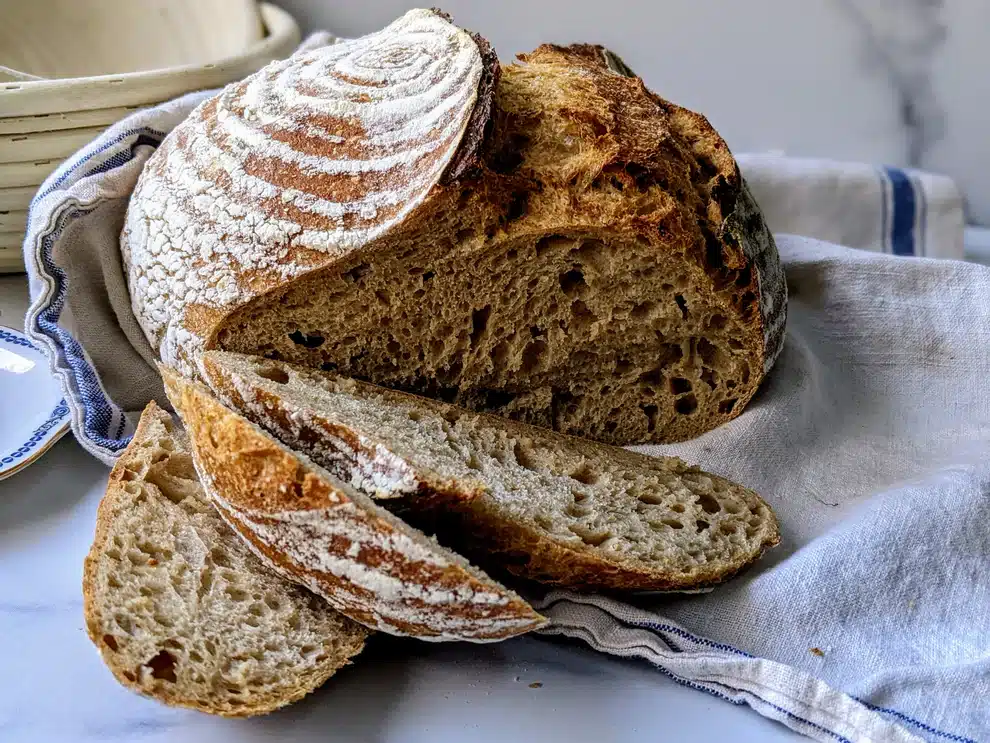
Because einkorn dough can be softer, baking in a tin is a practical option for pan loaves. For free-form loaves, a banneton and good tensioning can help, but it is worth accepting that einkorn loaves may spread a little more than a strong bread flour boule. The reward is often a tender crumb and a flavour profile that feels rustic and complete, even with minimal ingredients.
How to Use Einkorn Flour in Everyday Recipes
Einkorn flour can be used in a range of recipes, but it pays to match it to the style of baking you enjoy. For cakes, biscuits, crêpes, muffins, and quick breads, einkorn can often be substituted more easily than in high-rise yeasted loaves. For breads and sourdough, it helps to start with partial substitution and build confidence.
A practical approach for everyday baking looks like this:
Start with 20 to 30 percent einkorn flour in a familiar recipe, then adjust from there once you know how it behaves in your kitchen. In many recipes, you may find you can increase the proportion to 50 percent without dramatic changes, particularly in pancakes, banana bread, muffins, and cookies.
If you want to bake with 100 percent einkorn flour, choosing the right type of recipe makes the process smoother. Flatbreads, focaccia-style bakes, crackers, and tin loaves tend to be more forgiving than a high-domed free-form sourdough.
A few practical tips that help in real-world baking:
- Reduce mixing intensity. Let rests do the work.
- Expect stickier dough. Use wet hands or a light dusting of flour when shaping.
- Adjust hydration carefully. Add water gradually rather than assuming a set amount.
- Consider shorter fermentation. Watch the dough’s rise and feel, not just time.
- Bake a touch longer at a slightly lower temperature if the crust colours quickly, as some einkorn loaves can brown faster than expected.
For everyday substitution in non-bread recipes, many bakers keep the method simple: swap einkorn flour in at equal weight and see how the batter behaves, then correct by feel. If a batter seems thick, add a splash more liquid. If it seems loose, give it a short rest before changing anything, because einkorn can hydrate more slowly than you expect.
When shopping, you might also see different grinds, such as wholemeal einkorn and sifted einkorn. Wholemeal versions bring more texture and a stronger grain character, while sifted versions can be lighter and closer to white flour in handling, though still distinct.
Why Many Bakers Are Rediscovering Einkorn Flour
For many people, the appeal of einkorn flour is not about chasing perfection. It is about reconnecting with the idea that baking is a craft, and that different grains create different results. In a world where modern wheat flour is engineered for consistency, einkorn invites variation. It encourages you to slow down, take notes, and develop intuition.
Flavour is often the first hook. Einkorn can make even simple sourdough taste fuller, with a gentle sweetness and depth that pairs beautifully with butter, honey, olive oil, or savoury toppings. In pastry, it can add a pleasant nuttiness. In pancakes and waffles, it can taste richer without needing anything complicated.
There is also the romance of heritage wheat. Baking with an ancient grain can feel like participating in a longer story, one that includes old milling traditions, regional bread styles, and the patience of fermentation. That does not mean every loaf will be perfect, or that einkorn will replace your regular flours. Many experienced bakers keep it as one flour among several, using it when they want a specific flavour or texture.
Einkorn also suits a wholefood approach to baking. If you like keeping ingredients straightforward, using flour, water, salt, and starter, einkorn gives you another way to make bread interesting without add-ins. It rewards attention to basics: quality grain, good fermentation, and careful baking.
Where to Buy Einkorn Flour
Because einkorn is grown and milled in smaller quantities than mainstream wheat, it is usually found through specialty wholefood retailers, artisan mills, and organic grocers rather than in every supermarket aisle. When choosing einkorn flour, look for freshness, clear labelling, and milling details where available, such as whether it is wholemeal or sifted.
If you are looking for organic einkorn flour, it is worth checking retailers that focus on wholefood ingredients and carefully sourced pantry staples. Storage matters too. Like other flours, einkorn is best kept sealed in a cool, dry place, and if you buy larger quantities, some bakers store flour in the freezer to help maintain freshness, particularly through warmer months.
If you are new to einkorn, consider starting with a smaller bag and using it across a few different bakes. A batch of pancakes, a simple tin loaf, and a portion of sourdough flour blend will teach you more than reading labels ever will.
Frequently Asked Questions About Einkorn Flour
Is einkorn flour the same as spelt?
No. Einkorn and spelt are different ancient wheats with distinct structures and baking behaviour. Einkorn is a single-grain species, while spelt is a later hybrid.
Can you substitute einkorn flour for plain flour?
Yes, but recipes often need slight adjustments to hydration and mixing. Einkorn doughs are typically softer and benefit from gentler handling.
Is einkorn flour suitable for sourdough baking?
Einkorn can be used in sourdough, either blended with other flours or on its own. Many bakers prefer using it as part of a mix to balance structure and flavour.
How should einkorn flour be stored?
Store it sealed in a cool, dry place. In warm climates, refrigeration can help maintain freshness.
Conclusion
Einkorn flour appeals to modern home bakers because it brings together history, flavour, and the hands-on satisfaction of traditional baking. As an ancient grain and heritage wheat, it behaves differently from modern wheat, asking for gentler mixing, thoughtful hydration, and a willingness to bake by feel. For anyone interested in artisan baking, sourdough, and wholefood ingredients, einkorn offers a rewarding way to slow down and let the grain take the lead.
