

Uncategorized
What s Irish Sea Moss: Why People Take It and Why You Might Want To.
Irish sea moss has had a surge of interest in recent years, but it’s not a new ingredient. Traditionally used in coastal communities, this humble sea vegetable is best understood as a food first: a type of red seaweed that’s valued for its natural gelling texture and mineral content. If you’ve seen sea moss gel in smoothies online or noticed capsules on supplement shelves, this guide will help you understand what Irish sea moss is, how it’s commonly used, and how to choose a quality product.
What is Irish sea moss?
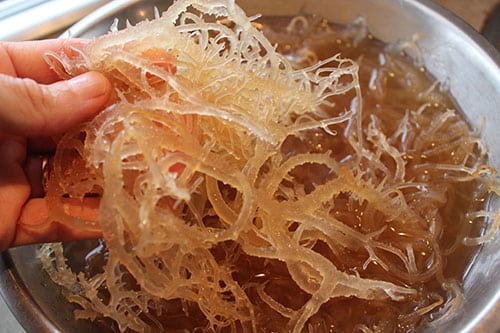
Irish sea moss is usually the name used for Chondrus crispus, a red seaweed that grows on rocky shorelines in the North Atlantic, including around Ireland and Scotland. When soaked and blended, it forms a smooth gel, thanks to natural compounds called carrageenans. These are the same kinds of seaweed-derived fibres used to thicken and stabilise foods.
Because it’s a whole marine plant, its nutrient profile can vary depending on where it’s grown, the season, and how it’s processed. That variability is one reason quality and sourcing matter.

Why do people take sea moss?
Most people use Irish sea moss for one of two reasons: as a functional food ingredient or as a convenient daily add-on (often in gel, powder, or capsule form).
Nutritionally, seaweed is known for containing a mix of minerals, and Irish sea moss is often discussed in relation to:
- Iodine, a mineral required for normal thyroid hormone production
- Trace minerals, which may include potassium, magnesium and calcium (amounts vary)
- Seaweed fibres, which can support digestive regularity for some people as part of a varied diet
It’s worth keeping expectations grounded. Sea moss is not a magic ingredient, but many people enjoy it as a simple way to add marine-derived nutrients and texture to everyday meals. If you’d like to explore options, you can find sea moss products in our gummy form.
Sea moss gummies vs gel vs powder vs capsules: which is best?
The “best” format comes down to what you’ll actually use consistently, plus how much control you want over ingredients and prep time.
Sea moss gummies
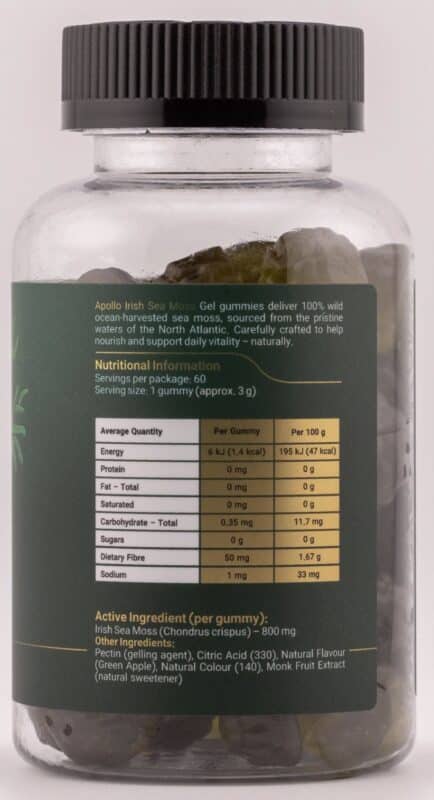
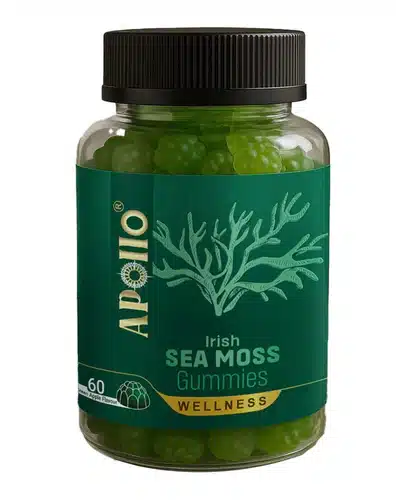
Gummies are the most convenient option for day-to-day use. They’re pre-portioned, travel-friendly, and a good fit if you don’t enjoy the taste or texture of sea moss gel. This is why many customers choose Apollo Irish Sea Moss Gummies: they make sea moss easy to remember and easy to take, without needing a blender or a plan.
Sea moss gel
Sea moss gel is popular because it’s simple to add to smoothies and bowls without changing the flavour too much. It can also work as a thickener in soups, sauces and desserts. Ready-made gels are convenient, but quality varies, so check the ingredient list for unnecessary additives and make sure storage directions are clear.
Dried sea moss (to make your own gel)
Dried sea moss suits people who want a hands-on approach and maximum control. You rinse it, soak it, then blend it with water into a gel. The upside is you decide exactly what goes in. The downside is the prep time, plus you’ll need to store it carefully once prepared.
Powder or capsules
Powders and capsules are a neat choice if you want convenience without the “gummy” format. They avoid the texture of gel and can be easy to add to a routine. The main watch-out is transparency: look for clear country-of-origin information and, where available, quality testing details.
What to look for when buying Irish sea moss
Because seaweeds grow in the ocean, sourcing and testing are more important than trendy packaging. Here are sensible checks that suit a premium, health-conscious shoppping approach:
- Clear identification: “Irish sea moss” should ideally specify the species (often Chondrus crispus).
- Origin and harvesting details: reputable brands share where it’s sourced.
- Testing and quality assurances: look for information on screening for contaminants such as heavy metals, where available.
- Minimal ingredients: especially for gels, avoid unnecessary sweeteners, colours or preservatives unless you genuinely need them for shelf stability.
- Freshness and storage: gels should have realistic use-by dates and refrigeration guidance.
A good rule: if the brand makes big, medical-style promises, it’s a red flag. High quality products tend to focus on sourcing, process, and how to use it in daily life.
How to use Irish sea moss in everyday food
If you’re new to it, start small and use it consistently rather than taking large amounts.
Common ways people include sea moss gel:
- Blended into smoothies for a thicker texture
- Stirred into overnight oats or chia puddings
- Added to soups or stews as a gentle thickener
- Mixed into homemade dressings for body and creaminess
Because sea moss already has a marine origin, it pairs well with flavours like citrus, berries, vanilla, cacao, and warming spices.
A note on iodine and who should be cautious
Sea moss is often discussed for its iodine content. Iodine is essential, but more is not always better. If you have a thyroid condition, take thyroid medication, or you’re pregnant or breastfeeding, it’s wise to speak with a qualified health professional before making sea moss a daily habit. For everyone else, a moderate approach and a product from a reputable supplier is the sensible path.
Conclusion
Irish sea moss is a traditional sea vegetable that many people now use as a modern pantry staple. As a gel, it adds a smooth, thick texture to foods, and as a whole marine ingredient it may support a nutrient-diverse diet. The most important things are quality, sourcing, and sensible serving sizes. If you treat Irish sea moss as a food first, and choose a well-made product, it can be an easy, versatile addition to your routine.
To see more products in gummy form, checkout our Apollo Range..
